

406.587.4531
simmental@simmgene.com
406.587.4531
simmental@simmgene.com
Finding the Balance: Cow Efficiency and Carcass Value in the Updated $API and $TI
By Dr. Jon DeClerck, ASA Executive Vice President
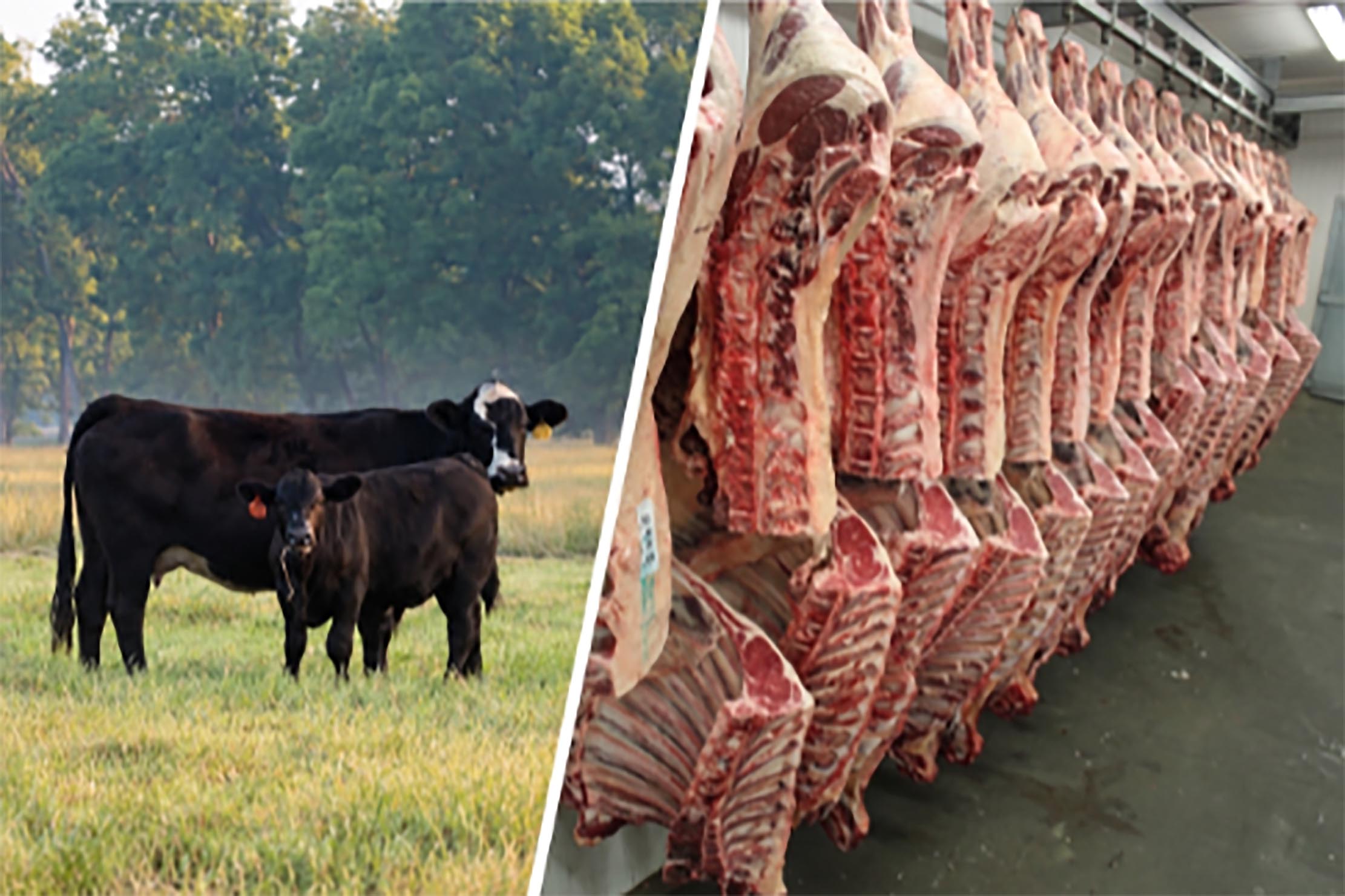
As we have shared more information about the updated $API and $TI, three changes have received a lot of attention: $API places downward pressure on mature cow weight, carcass weight carries more relative emphasis, and marbling carries less relative emphasis than before.
In many ways, those changes reflect a larger challenge facing the beef industry. We are being asked to produce more pounds of product while also keeping cow size, maintenance cost, and forage use in check.
That creates an obvious tension. If we want more carcass weight, are we simply going to make mature cows bigger too? And if moderate, cost efficient cows are important, why not build an index that stops at weaning and focuses solely on the cow-calf producer?
These are fair questions that highlight what I like most about the updated $API: it balances cow efficiency with downstream terminal value.
Marbling Still Matters
When $API and $TI debuted over 20 years ago, carcass quality was a major challenge across the industry, with the percentage of cattle grading Choice and Prime near historic lows. Improving marbling offered substantial economic opportunity.
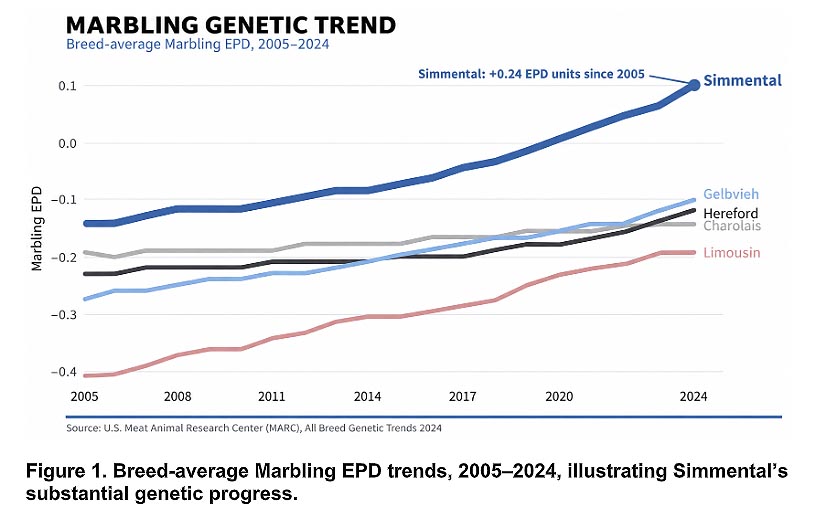
Simmental breeders responded. Over the next two decades, breeders submitted carcass and ultrasound data, used the Marbling EPD, and embraced $API and $TI as selection tools. Today’s population is far better positioned to capture grid premiums than it was in 2005. In short, the indexes did their job.
Think of a basketball player who struggles from the three-point line.
He practices relentlessly until he becomes a great shooter.
Does he stop shooting threes? Of course not.
But he doesn’t keep spending all his practice time fixing a problem he’s already solved.
That’s where we are with marbling.
We’ve made tremendous progress.
Marbling still matters. It still pays. It still carries substantial weight in our indexes.
But progress gives us permission to put more pressure on the next opportunities.
At the same time, the industry has continued moving toward substantially heavier carcasses, a long-term trend that has accelerated sharply in recent years. In work by Dr. Tatum and colleagues, although quality grade mattered, carcass weight was by far the biggest driver of carcass value, accounting for roughly 77–84% of the difference in revenue.
That makes intuitive sense. On most grids, I would rather market a 950-pound Choice carcass than an 800-pound Prime carcass. Prime premiums are important, but so are pounds. In this case, I still have another 150 pounds of product to sell.
Genetic trends remind us that selection indexes work. While Simmental breeders made substantial progress in marbling, other breeds have emphasized carcass weight.
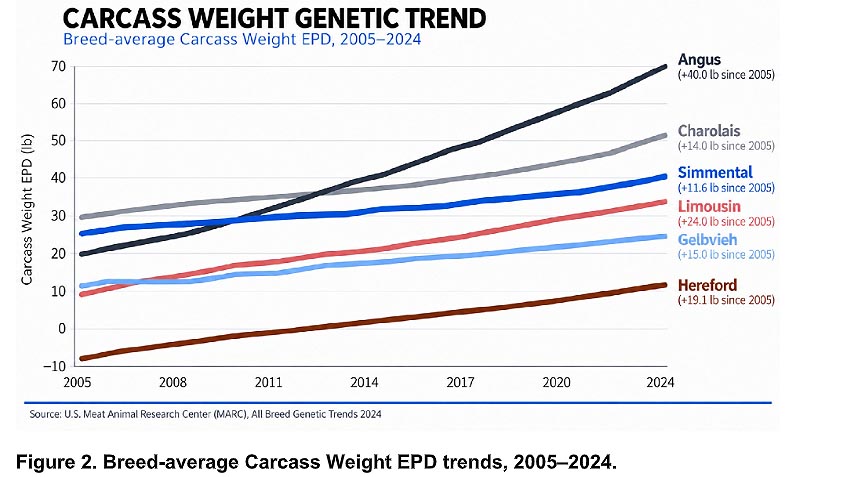
The takeaway is not that Simmental should chase maximum carcass weight. Extremes rarely serve the cattle industry well.
The opportunity is to create more carcass weight efficiently while balancing the other traits that drive profitability — exactly what $API and $TI are designed to do.
Why Not Stop at Weaning?
If most cow-calf producers sell calves at or near weaning, why doesn’t ASA simply build a maternal index that maximizes profitability at that point? Because the cattle industry only works when the next owner still wants to buy your calves.
If cattle underperform for backgrounders, feedyards, or packers, eventually those buyers discount them — or buy something else. That loss in confidence ultimately flows back upstream to both the cow-calf and seedstock producer.
That is why $API considers profitability across the production chain. SimGenetics need to create value for the cow-calf producer, but they also need to work for the next owner.
$API can reward value beyond weaning without letting mature cow size get out of bounds, and the fixed land base is what makes that possible.
The Fixed Land Base Keeps Us Honest
$API uses a fixed land base. In other words, the model assumes the amount of forage available does not increase just because cows get bigger. As mature cow size increases, carrying capacity declines, meaning fewer cows can be maintained on the same acres.
Because mature cow weight directly drives maintenance costs, the updated model creates a natural economic check against inflating cow size just to add carcass weight.
This is where the updated $API excels. It challenges us to keep cows efficient, fertile, and well adapted to their environment while producing calves that generate profit after leaving the ranch.
Finding that balance is the paradox facing the industry today — and exactly the kind of challenge SimGenetics should embrace.
There will be multiple ways to create a high-$API animal. Some will generate value through Stayability and lower cow cost; others through growth and carcass merit. The goal is not one visual mold. The goal is profit.
The better question is not, “What should high-$API cattle look like?” but, “How do these cattle make money?”
Our responsibility is not to preserve yesterday’s rankings. It is to build cattle that create value for tomorrow’s beef industry.
Subscribe to eNews ASA's weekly newsletter.
Sales Call: Calendar of upcoming sales and
eBlast: Sales and other industry promotions